

Botox, fillers and skin, with a doctor, not a therapist.
Tell us what you want treated. We check the licence of the person holding the needle, the protocol for your skin type and what goes in writing.
What would you like treated?
Free, and no obligation. Your details are never resold.
- A doctor holds the needle, not a therapist
- Product brand and units written down before you agree
- A protocol for your skin type, not a one-size setting
Treatment and pricing are agreed with the clinic we match you with, after it has assessed you.
- Rated 4.8/5 by 130 patients
- 2,400+ patients matched with a clinic
- 12 checks on every clinic, re-run every 6 months
- Matched in under 5 minutes, free for you
Botox, fillers and skin in Dubai.
The right device and the right protocol for your skin type matter more than the name above the door.
Botox, fillers, lasers, pigmentation, acne scarring and med spa. Which of them is right for you is a clinical decision and it belongs to the practitioner who examines you. What we can do is make sure the practitioner you see is the right one to be making it.
Free · No obligation · Matched in under 5 minutes

What each one actually involves.
Described, not ranked. Which one suits you is a clinical decision, and it belongs to the practitioner who examines you.
Laser resurfacing
Fractional and non-fractional devices for texture and scarring. Settings and device choice depend heavily on skin type.
Pigmentation treatment
Melasma and sun damage. Notoriously prone to rebound, which is why the protocol matters more than the session.
Acne and acne scarring
Active acne is treated medically first; scarring afterwards, usually across several modalities.
Injectables and skin boosters
Volume, fine lines and hydration. Who holds the needle matters more than the brand in the syringe.
Laser hair removal
Device choice is dictated by skin tone and hair colour, not by package price.
Free · No obligation · Matched in under 5 minutes
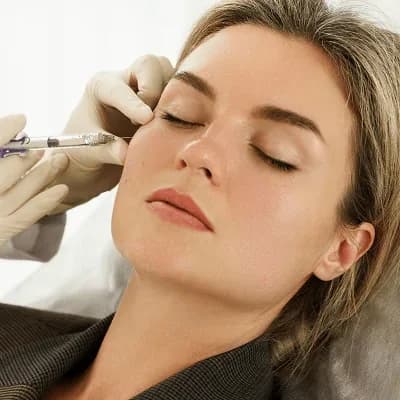
What separates one clinic from another here.
Take these into the consultation. The answers, and whether they arrive in writing, tell you more than any gallery.
- Protocol for your skin type“What is your protocol for my Fitzpatrick type, and how many patients with my skin have you treated?”
- The device itself“Which device is it, is it the original manufacturer's, and how old is it?”
- Who performs it“Is the treatment done by a dermatologist, or by a therapist under supervision?”
- A test patch first“Will you do a test area before committing me to a full course?”
- Number of sessions“How many sessions is this likely to take, and what happens if it takes more?”
Free · No obligation · Matched in under 5 minutes
How it works, in three steps.
From the form to the appointment. Most people hear back in under 5 minutes.

Tell us what you need
Your treatment, your budget, your timing and how you want to be looked after. No account, no phone call.
We find your match
We put your case against the 12 checks and everything you told us, then pick the clinic that fits it best.
The clinic takes it from there
We hand your case to the clinic and they contact you to arrange the appointment. We stay available for anything you want to ask, and we take no side.
Free · No obligation · Matched in under 5 minutes
Twelve checks, before any name reaches you.
Licence, volume on your exact procedure, written quotes and what happens afterwards. Re-run every 6 months.
Free · No obligation · Matched in under 5 minutes
3 checks
Licence and standing
3 checks
Competence on your exact procedure
3 checks
Commercial transparency
3 checks
Patient experience
What people ask us first.
Why does skin type matter so much here?
Darker skin holds more pigment in the epidermis, so the wrong device or setting can burn or cause the pigmentation it was meant to treat. In a city as diverse as this one, a clinic's experience across skin types is the single most useful thing to ask about.
How many sessions will I need?
Most courses run three to six sessions spaced weeks apart. Anyone quoting a single session for pigmentation or scarring is describing a package, not a plan.
Will it come back?
Melasma often does, which is why maintenance and sun protection are part of the treatment rather than an afterthought. A clinic that says otherwise is overselling.
Is a dermatologist necessary?
For a diagnosis, yes. Many treatments are then delivered by trained therapists under supervision, which is normal, what matters is that a doctor decided the plan.
Free · No obligation · Matched in under 5 minutes

The right botox & fillers clinic. Picked for you.
A few questions, and your match in under 5 minutes.
Free · No obligation · Matched in under 5 minutes
Worth knowing before you start
- Which treatment you are looking into
- Roughly what you would like to spend
- When you would like it done
4.8 / 5 from 130 reviews